It Makes Your Ugly Car Scratches Vanish.
No Prior Experience Necessary.
Guaranteed.
Or Your Money Back.
No Matter What Type Of Scratch Damage YOU HAVE ... We Have Your Back...GUARANTEED!
Vandalized Key Scratch? Deep Scrapes From Walls/Other Cars/Fences? Scotchbrite Scratches from trying to get bugs etc off ? Typical Surface Scuffs / Scratches? Nicks and Chips on your Hood, Bumper, Door edges? Fingernail / key chain scratches around your door handles? Bird Bomb etching? Plastic Garbage Can Abrasion? Shopping cart scratches? Bumper Scrapes & Scratches?

JUST $69
The Ultimate Car Scratch Remover
"Classic Kit"
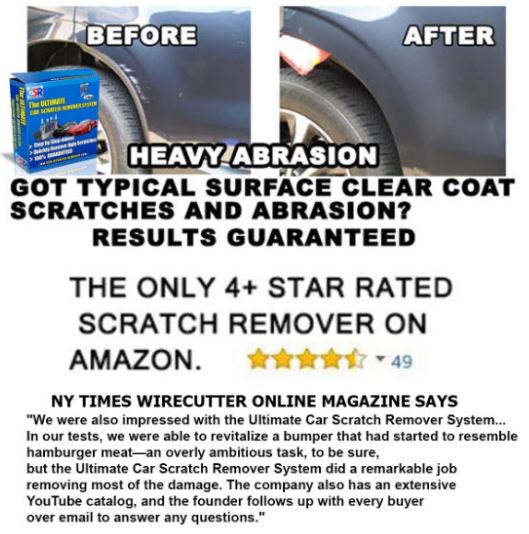
The Ultimate Car Scratch Remover Kit is the most complete kit on the internet for surface clear coat scratches. If you have typical surface clear coat scratches there is nothing else to buy and the results are guaranteed and backed with the industry's only ONE YEAR money back guarantee!
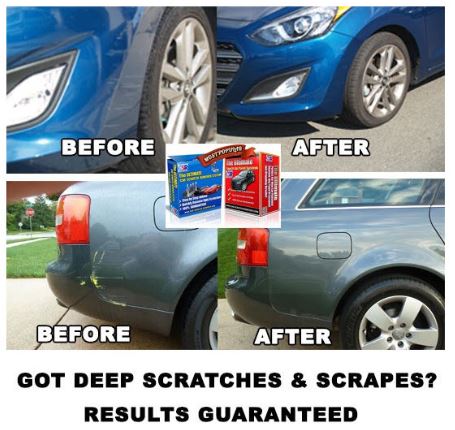
Got Deep Scratches & Scrapes That Need Touch Up Paint ?
...Maybe Normal Scratches Too?..... Maybe ALL IN THE SAME AREA?
JUST $149
The Ultimate Car Scratch Remover "Classic Kit" + Custom Touch Up Paint kit!
The Ultimate Car Scratch Remover Kit PLUS A CUSTOM TOUCHUP KIT is the most complete kit anywhere for ANY TYPE OF SCRATCH OR SCRAPE YOU WILL ENCOUNTER. Nothing else to buy and the results are guaranteed and backed with the industry's only ONE YEAR money back guarantee!
I really prefer to let my customers tell you about their scratch removal success,
because at the end of the day that's all that really matters.
I have dozens and dozens more like this but I think you get the point...it's legit. Karl-
Karl,
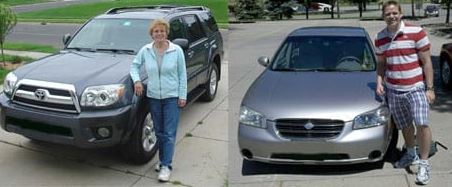
I love your product. I got the scratches out of my car and this weekend and we tried it on our son's 2000 Nissan Maxima headlight. One was replaced in an accident and the other was the original lens (very yellow). We always thought that was some sort of condensation on the inside. The light got almost like new! I am completely satisfied and have been recommending you to my friends.
Thank you!!!!
Donna
HERO MOM!
Dear Karl.
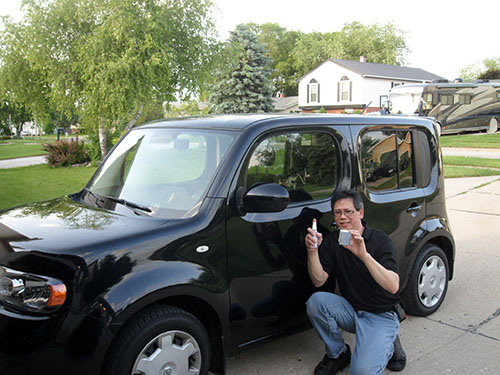
I bought a used nissan cube 2010 and when i drove it to show it off to my brother he noticed right away the scratches on the hood and on driver door. i was kinda embarrassed about it , so i bought a scratch remover called "QUIXX"supposed to be the best German made scratch remover, it came with a couple of sand paper two small towels but was not able to remove any scratch! so that's when i started watching youtube on how to remove car scratches. The first video i watched was your video and i was impressed. to make the story short , i went to see my dad (fathers day) and my brother was there he saw my nissan cube and he was amazed! i told him about your product. ( i still have more scratches to remove) and by the way thanks for the extra safe-t sand . I'm keeping this amazing product thanks again
Leo Amponin
Impressed his brother and father on Father's Day
Good Evening Karl,
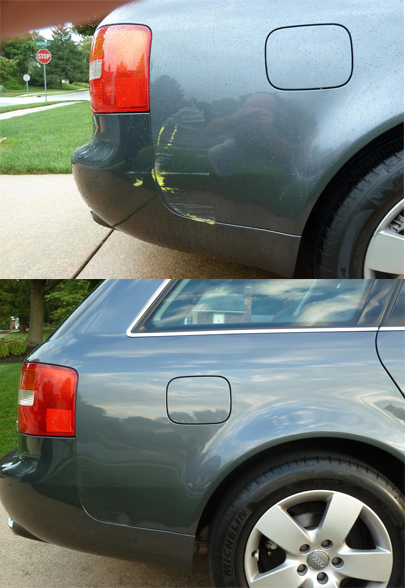
I have attached before/after photos of the repaired area. I would rate the repair as more than acceptable when considering my previous expertise (none) with such an extensive repair in the past. Your system allowed me to do a repair at a fraction of the bodyshop estimate $900 cost (out of my pocket) with nice results. This winter I might revisit the repaired area to see if any additional procedures would rid the remaining minor scratched areas that are still present only on close inspection with a hand held lamp. Regards.
Dennis Amorose
Saved $900.00 not going to the bodyshop
Karl,
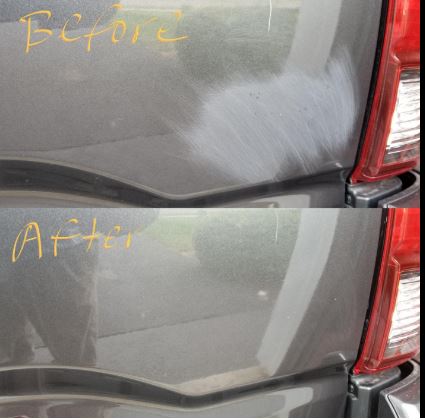
I recently removed my car emblems and later tried to clean the area with a Scotch-Brite scrub sponge...what a mistake! This classic mistake created a visible damage on the clear coat. Then, I searched online fo remedies and found this kit to be used for the same purpose including a video on YouTube.
When I received was impressed with the detailed labels of each kit component and easy instructions.
It removed most of the scratches and the finish coat help to camouflage the rest. Will definitively recommend this product and save the rest for future scratches!
Jose R. Fernandez
Classic innocent mistake - fixed in no time.
THE ULTIMATE CAR SCRATCH REMOVER IS BACKED BY
THE ONLY GUARANTEE OF IT'S KIND.
USE THE KIT FOR A FULL YEAR AND IF YOU ARE NOT THRILLED
RETURN IT FOR A 100% REFUND.
Copyright © The Ultimate Car Scratch Remover. All Rights Reserved.